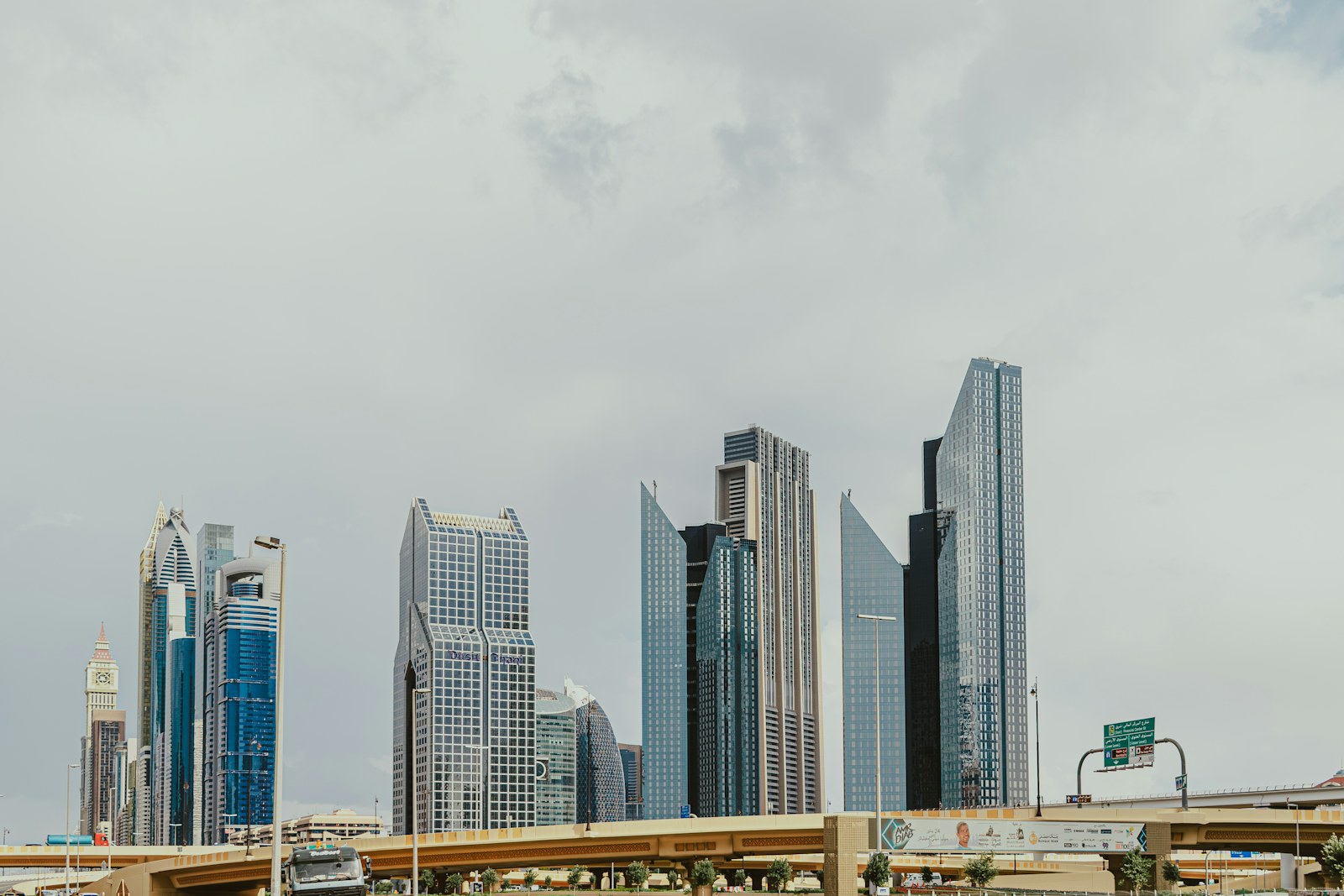
Dubai’s economy grew 2.4% year on year in the first quarter of 2026 to AED232 billion. The more important story is not the headline rate; it is the spread of activity beneath it. Finance, construction, health, utilities, trade, property and communications all contributed to a growth picture that is broader than the skyline shorthand often used to describe the city.
For operators, that mix matters. A city dependent on one cycle offers one kind of opportunity and one kind of risk. A city in which capital, population services, trade and the built environment reinforce one another offers a different proposition.
What did Dubai’s Q1 2026 numbers show?
Wholesale and retail trade remained the economy’s largest component, contributing about 22% of GDP and AED50.9 billion in real gross value added. Financial and insurance activities reached AED32.4 billion, equivalent to 14% of the economy, after growing 6.5% from a year earlier. Real estate generated about AED26 billion and grew 3.1%, while construction expanded 8.2% to roughly AED18.7 billion.
Those figures challenge two easy readings. The first is that Dubai is simply a property story. Property and construction are clearly important, but they sit inside a larger commercial system. The second is that diversification is mainly about new technology sectors. In practice, it can also mean a stronger balance among finance, trade, health, logistics, professional services and the infrastructure of daily life.
Finance carried an outsized share of growth
Finance contributed 0.88 percentage points to the quarter’s overall growth—about 37% of the total growth recorded, according to the official release. That is a larger analytical signal than the sector’s 14% share of GDP alone. It suggests that the institutions allocating capital, insuring risk and serving companies are not merely accompanying expansion; they are helping propel it.
For a founder, this can translate into denser access to investors, banks, advisers and cross-border clients. For an established regional group, it can reduce friction around treasury, holding-company and market-entry decisions. The opportunity is not automatic: financing costs, regulation and competition still determine which companies can use that infrastructure effectively. But the platform itself is deepening.
Construction is fast; real estate is steadier
Construction’s 8.2% rise outpaced real estate’s 3.1% increase. Reading the two together is more revealing than treating them as interchangeable. Construction reflects the current pipeline of physical capacity. Real-estate activity reflects transactions, management and use of the asset base.
A faster construction number can support growth, but it also raises the practical question every operator should ask: which new capacity will produce durable demand rather than simply more supply?
That question should shape our reporting. Instead of celebrating every project announcement, The MENA Ledger will follow occupancy, tenant mix, financing, delivery and the businesses created around new districts.
The less obvious signals are health and utilities
Human health and social work recorded the fastest sector growth at 17.5%, although it represented only 1.5% of GDP. Electricity, gas, water supply and waste-management activity grew 8.4% and accounted for 2%. These are smaller sectors, but they point toward the service demands of a growing city: healthcare capacity, power, water, waste and the operating systems that make density liveable.
This is where the next generation of Dubai business stories may sit. The visible assets are hospitals, utilities and buildings; the less visible opportunities are software, staffing, maintenance, energy management, compliance, specialised training and supply chains.
What should business leaders watch next?
- Finance: whether credit and investment reach operating businesses beyond headline transactions.
- Construction: whether newly delivered capacity creates productive clusters and not only inventory.
- Health and city services: whether rapid growth improves access, quality and unit economics.
- Trade: whether Dubai’s largest sector keeps converting connectivity into locally rooted enterprise value.
- Technology: whether information and communications growth becomes embedded across older sectors rather than isolated in a “tech” category.
The bottom line
Dubai’s Q1 numbers do not prove that every part of the economy is equally resilient, and one quarter cannot settle the cycle. They do show why the city is better understood as a connected operating system than as a property market with an airport. The next story is how well its different engines convert scale into productivity, durable companies and opportunity for people who live and build there.
Related analysis: Dubai and Cairo Are Building Complementary Business Advantages.
Source note: Analysis based on the Dubai Data and Statistics Establishment release published by the Government of Dubai Media Office on 8 July 2026. Figures should be checked again immediately before publication.
Source: Government of Dubai Media Office.