Saudi Arabia’s Non-Oil Economy Has Crossed a Symbolic Threshold. Now Comes the Productivity Test
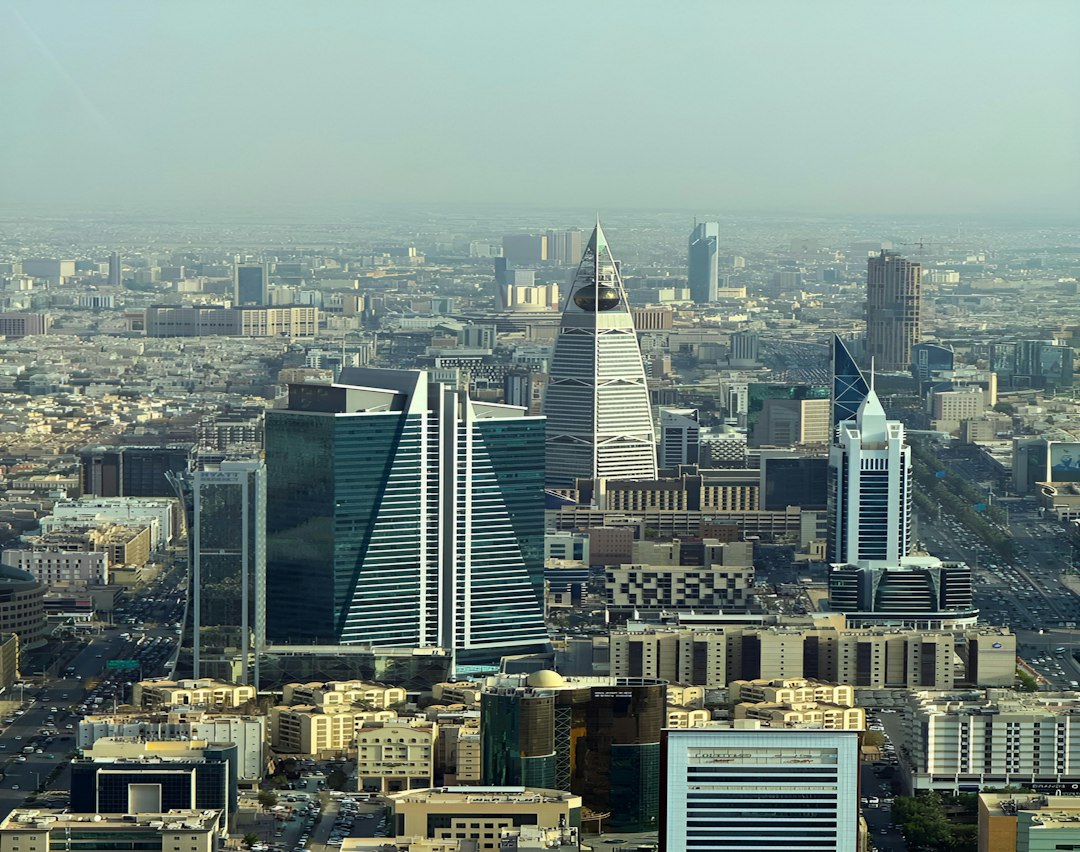
Diversification is increasingly visible in Saudi Arabia’s national accounts. The harder measure will be whether new activity produces competitive exports, productive private companies and durable jobs.
Saudi Arabia’s economic transformation has reached an important marker: non-oil activity now accounts for more than half of the economy.
That does not mean the work of diversification is complete. It means the question has changed.
The debate is no longer whether construction, tourism, logistics, technology, entertainment and business services can generate meaningful activity alongside oil. They clearly can. The more difficult question is whether this new economic base can become steadily more productive, internationally competitive and less dependent on public spending for momentum.
Official data show substantial progress. The General Authority for Statistics estimates that Saudi Arabia’s real gross domestic product grew 4.5 per cent in 2025. Non-oil activities expanded 4.9 per cent, while the Vision 2030 annual report says non-oil activities now represent more than half of GDP.
Crossing that threshold is symbolically powerful. It also makes the quality of non-oil growth more important than its headline size.
From diversification to productivity
An economy can diversify by adding new sectors, attracting visitors, building infrastructure and increasing domestic demand. Sustained prosperity requires something more: each worker and company must become capable of producing greater value over time.
Productivity is what allows wages to rise without steadily eroding competitiveness. It is what turns an expanding domestic market into an export platform. And it is what will determine whether new Saudi industries remain viable after an initial cycle of investment and incentives.
The next stage of Vision 2030 will therefore be judged less by the announcement value of individual projects and more by operating results across thousands of companies.
Are logistics investments reducing the cost and time required to trade? Are tourism businesses improving revenue and service quality without relying indefinitely on exceptional events? Are local manufacturers moving into more sophisticated products? Are small and medium-sized companies adopting technology that helps them grow beyond the domestic market?
Those are quieter questions than a megaproject launch, but they are central to the durability of the transformation.
The export numbers show both progress and tension
Trade data offer a useful reality check.
Saudi non-oil exports including re-exports rose 18.6 per cent in the fourth quarter of 2025 compared with the same period a year earlier, according to GASTAT. But national non-oil exports—the goods produced in the Kingdom rather than imported and shipped onward—declined 1.5 per cent.
That distinction matters.
Growth in re-exports supports Saudi Arabia’s ambition to become a logistics and distribution hub. It reflects the value of ports, transport links and the Kingdom’s position between major markets.
Growth in domestically produced exports would demonstrate something different: that Saudi companies are building goods with the quality, price and reliability required to win customers abroad.
Both forms of trade are useful. They should not be treated as interchangeable evidence of productive diversification.
The composition of output also deserves attention. In 2025, crude oil and natural gas remained the largest individual contributor to GDP at current prices, at 17.1 per cent. Government activity contributed 14 per cent, while wholesale and retail trade, restaurants and hotels contributed 12.3 per cent. Manufacturing excluding oil refining represented 11.1 per cent.
The rise of hospitality, trade and construction shows that diversification is creating a broader economic landscape. Expanding non-oil manufacturing and tradable services would deepen it further.
Jobs are the connection between growth and public value
For Saudi citizens, diversification ultimately becomes tangible through work: who participates, what skills employers demand, how quickly careers progress and whether private-sector wages reflect rising productivity.
The labour market has changed markedly. Saudi unemployment reached 6.3 per cent in the first quarter of 2025, according to GASTAT, while female labour-force participation reached 36.3 per cent.
Participation, however, is only one part of the outcome. The next questions concern job quality, retention and advancement.
Fast-growing sectors need to create credible career ladders rather than simply entry-level positions. Employers must have incentives to invest in people after hiring them. Education and training providers need current information about the roles companies are actually struggling to fill.
In that sense, productivity policy and labour policy are the same agenda. Better-managed, more technically capable companies can pay more and train more because each employee produces greater value.
Private capital must do more of the selection
Public investment has been an essential catalyst for new markets. Over time, private capital will need to take a larger role in determining which companies and projects deserve to expand.
That shift matters because commercial investors impose a different discipline. They ask whether demand will survive without a subsidy, whether cash flow can support expansion and whether a business can compete for customers rather than simply complete a contracted project.
The objective is not a rapid withdrawal of the state. It is a gradual transition from state-led market creation to markets where private companies can discover opportunities, fail, consolidate and grow.
Competition will be as important as capital. Productive economies allow new businesses to challenge incumbents, make procurement accessible and reduce the administrative cost of closing or restructuring ventures that do not work.
The next scorecard
Saudi Arabia’s diversification should now be assessed through a wider scorecard:
- growth in national non-oil exports, separated clearly from re-exports;
- private investment that is not primarily tied to government contracts;
- productivity and wage growth across non-oil industries;
- survival and expansion rates for small and medium-sized enterprises;
- progression of Saudi workers into technical and managerial roles; and
- the share of new sectors able to compete in regional or international markets.
The achievement of building a non-oil economy larger than the oil economy should not be understated. Few resource-dependent states have attempted change at Saudi Arabia’s speed or scale.
But a threshold is not a finish line. It is the point at which diversification must begin proving that it can sustain itself.
Sources