
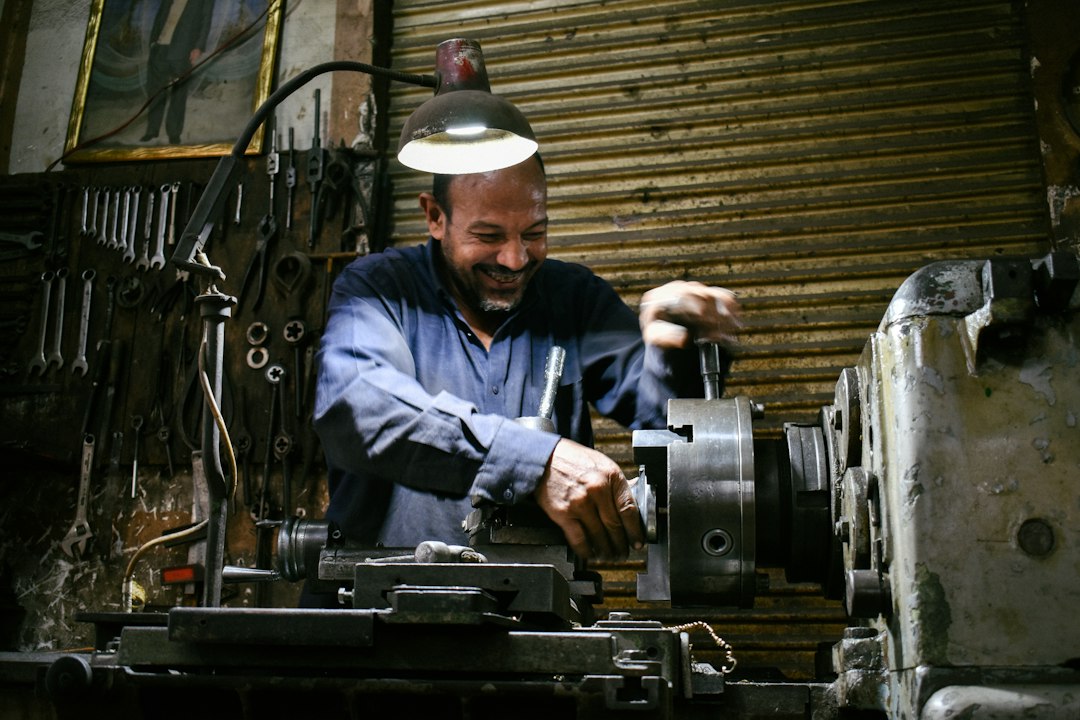
Egypt’s next industrial-policy experiment is not simply another incentive for building new factories. It is an attempt to connect private capital with existing industrial capacity, smaller suppliers and distressed plants that may be capable of returning to production.
In September 2026, Egypt’s industry ministry outlined cooperation with private-equity and venture-capital representatives around proposed industrial investment funds, an “Industrial Franchise” model, support for distressed factories and financing for small and medium-sized manufacturers. The announcement also referred to a digital platform intended to connect factories with investors.
The concept addresses a real gap. Industrial policy often concentrates on licences, land and headline investment. The harder work is financing machinery, improving management, integrating local suppliers and giving investors a realistic path to returns.
The case for restarting productive assets
A distressed factory is not automatically a viable factory. Some plants suffer from obsolete equipment, weak products, excessive debt or structural cost disadvantages. Others may have useful machinery, trained workers and customer relationships but lack working capital or modern management.
The distinction is essential. A credible programme must identify assets that can become competitive rather than preserving every company that has failed.
That requires reliable information: ownership, liabilities, equipment condition, energy use, environmental obligations, workforce skills and market demand. Without transparent data, investors will price uncertainty heavily or stay away.
Why a fund alone is insufficient
Capital can finance a turnaround, but it cannot substitute for operational capability. Restarting a factory may require new managers, supplier renegotiation, export certification, digital systems, quality control and access to distribution.
An industrial fund therefore needs more than financial analysts. It needs sector specialists capable of assessing production economics and leading restructuring. Governance must also protect the investment process from pressure to support politically attractive but commercially weak projects.
The state’s role is strongest where it reduces friction: clarifying ownership, resolving permits, improving industrial data, coordinating utilities and creating transparent rules for distressed assets.
The industrial-franchise idea
The proposed franchise model could be significant if it links smaller manufacturers to proven processes, product standards and market access from larger firms. In principle, that can help SMEs move from informal or inconsistent production into reliable supply chains.
But the term “franchise” needs operational definition. Will larger factories license processes, guarantee orders, provide equipment or supervise quality? Who finances upgrades? How is intellectual property handled? Without clear incentives for both sides, the model risks becoming a networking programme rather than an industrial system.
Exports are the real discipline
Egypt has stated an ambition to raise industrial exports substantially by 2030, with priority sectors including garments, food, pharmaceuticals, automobiles, electrical and engineering equipment and electronics assembly.
Export markets impose discipline. Products must meet standards, arrive on time and remain competitive after transport and financing costs. A turnaround programme should therefore be evaluated through sustained orders, capacity utilisation and export performance—not only the number of factories receiving support.
Recent discussions with international manufacturers also point to interest in deeper local value chains rather than final-stage assembly alone. That opportunity depends on supplier quality, trade facilitation and predictable policy.
What investors will need
Private capital will look for enforceable rights, accurate accounts, credible management and a route to exit. Industrial projects often require longer holding periods than technology investments. Currency exposure and the cost of imported equipment add further complexity.
Blended structures may be useful, but public participation should absorb clearly defined risks rather than obscure whether a project is viable. Reporting should disclose how factories are selected, how performance is measured and what happens when a turnaround fails.
A test of industrial execution
Egypt’s advantage is not only labour cost. It includes a large domestic market, established industrial clusters, proximity to Europe and the Gulf, and an expanding services base. The constraint has often been execution across finance, logistics, management and regulation.
If the proposed funds and platform make viable industrial assets easier to evaluate and finance, they could unlock more value than another round of headline factory announcements. If they become vehicles for indefinite rescue, they will postpone restructuring rather than deliver it.
Sources
- Egypt State Information Service: industrial investment and factory-financing proposals
- Egypt State Information Service: manufacturing and export strategy
- GAFI: discussions on integrated garment production and exports
Featured image: Rawan Yasser / Unsplash.