
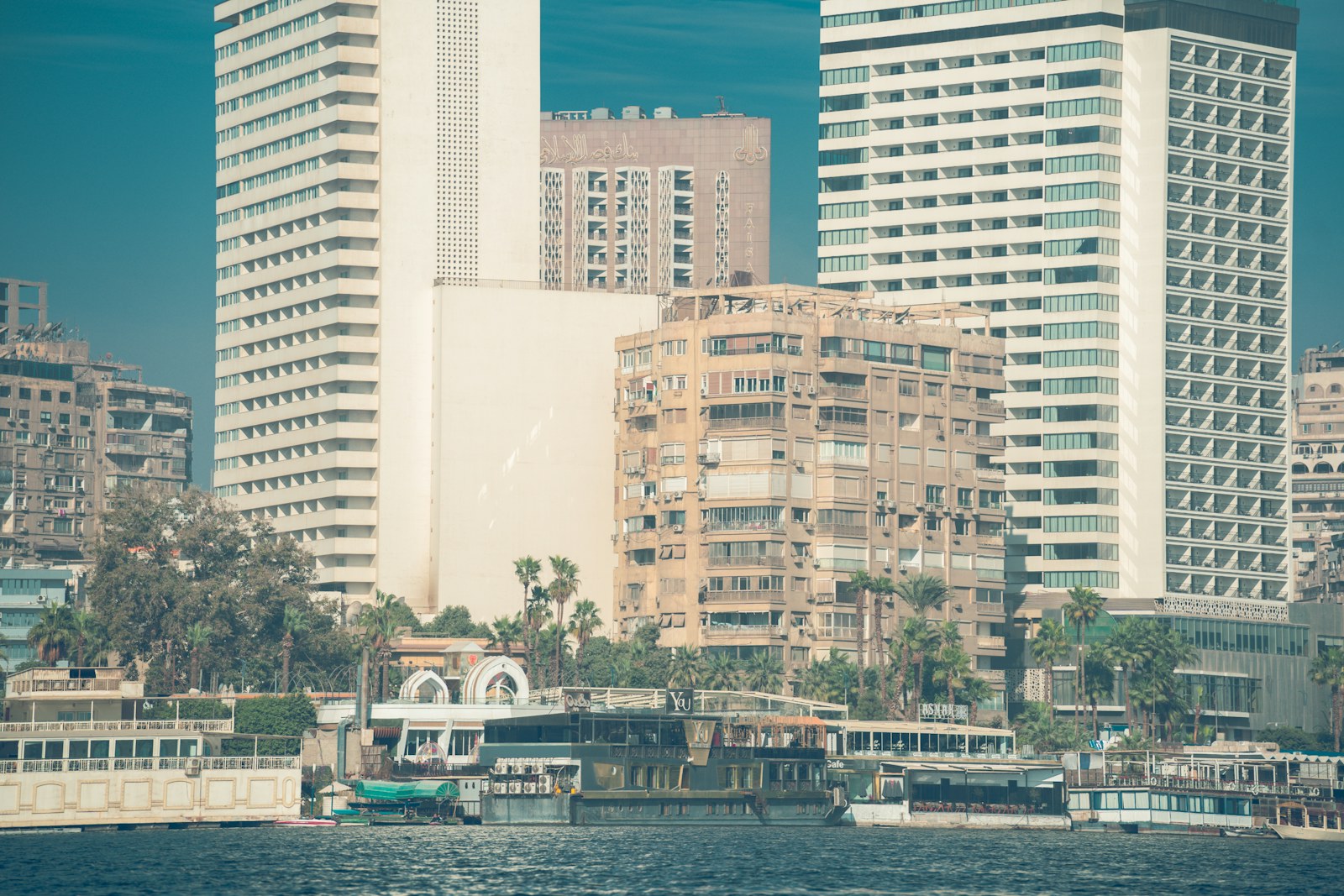
Dubai and Cairo are often compared as competing destinations. A more useful business question is whether their strengths can be combined. Current public data points to a plausible two-city model: Dubai as a platform for finance, regional headquarters and market access; Cairo—and increasingly Alexandria—as a base for talent, technology delivery and product execution.
That is an editorial inference, not proof of a seamless corridor. Company-level reporting is still needed on capital flows, hiring, costs, regulation and operating results. But the complementary pattern is strong enough to investigate.
What does Dubai contribute?
As examined in Dubai’s Growth Engine Is Broader Than Real Estate, the city’s first-quarter 2026 economy reached AED232 billion. Wholesale and retail trade represented about 22% of GDP, financial and insurance activity 14%, and real estate 11.2%. Finance grew 6.5% from a year earlier and accounted for roughly 37% of the quarter’s overall growth.
For a regional company, that mix can support capital raising, treasury, advisory services, international recruitment, client access and movement between markets. Dubai’s advantage is not simply wealth; it is the density of institutions and decision-makers around a highly connected commercial hub.
What does Egypt contribute?
Our analysis of Egypt’s $5.2bn offshoring economy shows a different form of scale: more than 195,000 specialists and a delivery footprint extending beyond Cairo. ITIDA also reports that 252 companies operate 282 delivery centres, with Alexandria becoming a material base for global operators.
The value proposition is often described as talent at a competitive cost. Cost matters, but it is not enough. Egypt’s larger strategic asset is the possibility of building deep teams across languages and functions, from enterprise services to software and engineering. The harder task is creating the stability, management systems and career progression that convert a labour pool into long-term capability.
The two-city operating model
| Function | Likely centre of gravity | What must be tested |
|---|---|---|
| Regional leadership and partnerships | Dubai | Decision speed, senior hiring and client proximity |
| Finance, treasury and investor relations | Dubai | Banking access, regulation and cost |
| Engineering and service delivery | Cairo / Alexandria | Skill depth, retention, data controls and continuity |
| Brand, content and cultural intelligence | Both | Local authenticity and cross-market relevance |
| Product discovery | Both | Whether teams share customer evidence, not assumptions |
The model fails when companies treat one city as the “front office” and the other as an invisible cost centre. The strongest organisations distribute authority as well as tasks. Product, engineering and market teams need shared goals, senior leadership on both sides and routine movement of people and knowledge.
Where friction will appear
- Regulation: corporate structure, licensing, data transfer, employment and taxation must be designed for the actual activity in each jurisdiction.
- Currency and pricing: revenue and cost bases can move differently; contracts need realistic buffers and review points.
- Management: distributed teams expose weak documentation and slow decision rights.
- Status: if one office is always presented as strategic and the other as cheap, retention and collaboration will suffer.
- Travel is not integration: frequent flights do not replace shared systems, trust and accountable leaders.
A reporting agenda for The MENA Ledger
This two-city thesis becomes valuable only when tested against real companies. We should profile businesses that operate across the Gulf and Egypt, publish transparent operating maps, interview leaders in both locations and follow outcomes over time. Which decisions remain in Dubai? Which functions are built in Egypt? How is value shared? What broke during expansion? Those questions can become a defining franchise rather than a one-off opinion.
The bottom line
Dubai and Cairo do not need to become alike. Their differences are the point. One offers exceptional commercial connectivity and institutional density; the other offers human scale, technical capacity and a large creative and entrepreneurial base. The opportunity is to build companies—and journalism—that can see both cities clearly enough to connect them without flattening either one.
Method note: This analysis combines separate official datasets; it does not quantify bilateral flows. Future reporting should test the thesis with company financials, hiring data and interviews.
Sources: Government of Dubai Media Office; ITIDA.