Can Digital Art Become a Real MENA Industry?
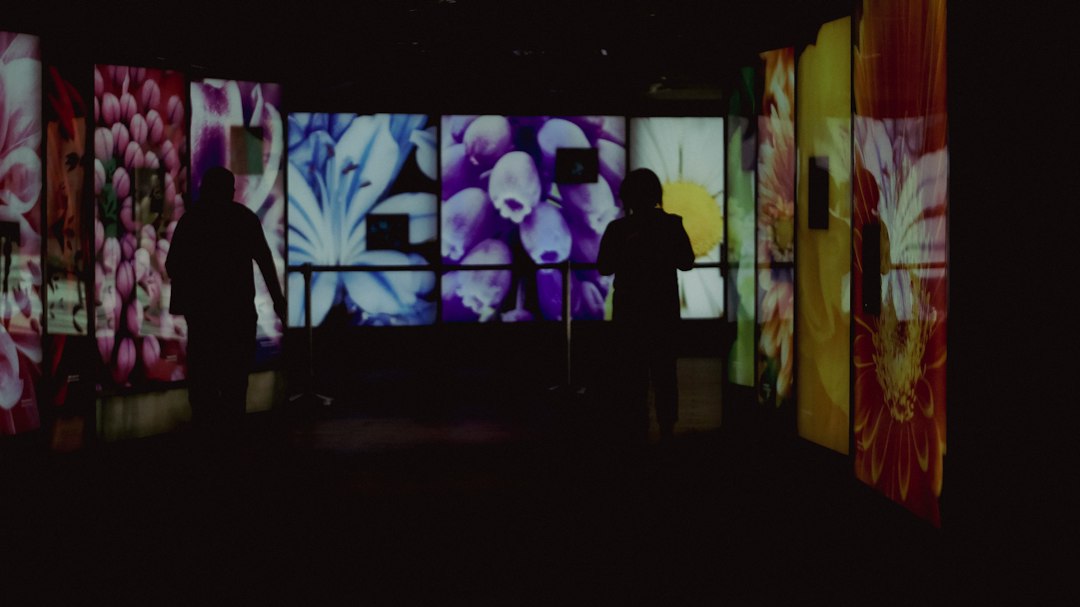
New museums and immersive exhibitions are expanding the audience for digital art. Turning attention into an industry will require collectors, rights frameworks, preservation skills and sustainable careers for artists.
Digital art has become highly visible across the Middle East and North Africa.
It appears on monumental screens, inside immersive exhibitions, across art fairs and in the visual language of major events. Cities use it to signal technological ambition. Brands commission it for attention. Audiences encounter it in spaces that sit somewhere between a gallery, a performance and an entertainment venue.
Visibility, however, is not the same as an industry.
An industry allows artists and technical collaborators to build sustainable careers. It has buyers who understand what they are acquiring, institutions capable of preserving the work and clear rules governing display, reproduction and resale. It produces knowledge and businesses as well as spectacles.
The launch of Dubai’s Museum of Digital Art provides a timely test. Planned across five floors in the DIFC Zabeel District, the institution is intended to combine exhibitions, immersive experiences, education and research. It will also have a “digital twin” designed to extend access beyond the physical museum.
That is significant infrastructure. The larger question is whether institutions of this kind can help build the market and professional ecosystem around the art they present.
Beyond the immersive room
The most accessible form of digital art is often an immersive installation: projected images, sound, sensors and responsive environments designed to surround the visitor.
These experiences can attract people who rarely enter a conventional gallery. They can create demand for animators, programmers, sound designers, architects and producers. They can also support cultural tourism.
But the business model tends to centre on tickets, sponsorship and event production rather than long-term artistic ownership. The artist may function as one supplier within a complex technical installation, while most of the commercial value sits with the venue, producer or intellectual-property owner.
A healthy digital-art economy needs room for both public experiences and collectable work. It should support artists creating software, generative systems, moving images, interactive installations, games and digitally native forms that may not fit comfortably on a large projection wall.
Collectors need to know what they own
Buying a painting normally includes a physical object, a documented history and established expectations about display and resale. Digital work can be less intuitive.
Does the collector receive a file, a licence, a unique edition or the equipment required to display it? Can the work be shown publicly? Who updates it when operating systems or hardware change? What happens if an external platform used by the artwork disappears?
These questions are solvable, but they require contracts, technical documentation and professional advice.
The short-lived speculative enthusiasm around non-fungible tokens demonstrated that proof of a transaction does not by itself answer questions about copyright, authenticity or the continuing operation of the artwork. Blockchain can help record ownership or automate contractual royalties. It cannot replace clear legal rights and responsible stewardship.
Galleries and auction houses in the region can play a useful role by standardising what accompanies a sale: edition information, source files where appropriate, display rights, certificates, maintenance commitments and a preservation plan.
Without that confidence, many serious collectors will continue to treat digital art as an event rather than an asset or cultural commitment.
Preservation is an overlooked profession
Digital works can be fragile in ways that are not immediately visible.
A screen can be replaced, but an artwork built for obsolete software, a discontinued sensor or an online service may stop functioning entirely. Even a simple video file can lose context if its intended display conditions and technical specifications are not recorded.
Museums entering this field will need conservators who understand software, hardware and networked systems. They will also need policies for migration—moving a work to newer technology without altering its essential character—and emulation, which recreates an older technical environment.
This could become an area in which MENA institutions develop valuable expertise. Rather than importing every exhibition as a finished package, museums and universities could train regional teams in digital conservation, exhibition technology and archival practice.
Those skills would serve film, broadcasting, games and digital heritage as well as fine art.
Artists need leverage over technology
Generative AI is creating new tools for artists while reopening unresolved questions about authorship, consent and training data.
For artists in the region, the issue is not whether AI belongs in creative work. Many already use it. The important questions are whether they understand the terms of the tools, whether their own work is being used to train commercial systems and how audiences can distinguish a deliberate artistic practice from inexpensive automated production.
Institutions should avoid treating technological novelty as a substitute for artistic judgment. An exhibition becomes meaningful because of the ideas, choices and context behind it—not because a model, sensor or headset was involved.
Commissioning agreements should also protect artists’ ability to show work later, receive credit and share in continuing commercial uses where appropriate.
The region needs a connected market
MENA has no shortage of cultural institutions, design talent or audiences. Its weakness is fragmentation.
An artist may find a commission in one city, technical collaborators in another and a collector elsewhere, with few common standards connecting the transaction. Cross-border payments, shipping of equipment, visas, insurance, rights management and differing legal frameworks all add friction.
A stronger regional market would connect museums, galleries, universities, technology companies, collectors and independent spaces. Shared professional standards could make it easier for a work commissioned in Cairo, Tunis or Beirut to be exhibited and collected in Dubai, Riyadh or Doha—and vice versa.
The broader economics justify attention. UN Trade and Development says creative industries contribute between 0.5 and 7.3 per cent of GDP across countries in its survey and employ between 0.5 and 12.5 per cent of the workforce. Creative services exports have more than doubled since 2010, although they remain concentrated in a small number of economies.
Digital art will be a small part of that picture. Its value lies partly in how it connects art with software, education, tourism, design and media.
A practical industry agenda
The region does not need to declare itself a global digital-art capital. It needs to do the less glamorous work that would allow one to emerge:
- establish clear standards for digital-art sales, licences and authenticity;
- train conservators and technicians in software-based and interactive work;
- commission artists for multi-year research and production, not only events;
- provide affordable access to equipment, studios and technical collaborators;
- support independent criticism, archives and scholarship;
- collect work from across the region rather than only internationally recognised names; and
- publish data on commissions, employment, sales and audience development.
Dubai’s new museum could become an anchor for this ecosystem if it treats the institution as more than an attraction. Other cities will bring different strengths: artistic communities, universities, archives, film industries and lower-cost production.
Digital art becomes an industry when those strengths connect—and when the people making the work can build a life, not just an installation, around it.
Sources