Dubai’s Diamond Economy Is Splitting in Two
Luxury Systems
Dubai’s diamond business is no longer one market moving at one speed. It is becoming two connected but increasingly distinct systems: natural diamonds, where rarity, provenance and emotional value remain central, and laboratory-grown diamonds, where manufacturing economics, technological applications and transparent product segmentation will determine the next phase.
The scale of both markets makes Dubai an unusually important place to watch. DMCC reported that total diamond trade through the emirate reached a record US$41.7 billion in 2025, alongside 359.5 million carats traded. Natural diamonds still represented 95.8% of total trade value. Yet a separate DMCC announcement showed that 76.9 million carats of laboratory-grown diamonds moved through the UAE in the same year, a 91.5% increase, with trade valued at US$1.3 billion.
Those numbers do not describe a simple replacement story. They describe the emergence of different value propositions that happen to share a material name.
Scarcity and scale are different businesses
The natural-diamond proposition depends on ideas that luxury understands well: geological rarity, individual character, heritage, documentation and the ritual attached to ownership. The product is not merely a polished stone. It is a combination of material, story, trust and occasion.
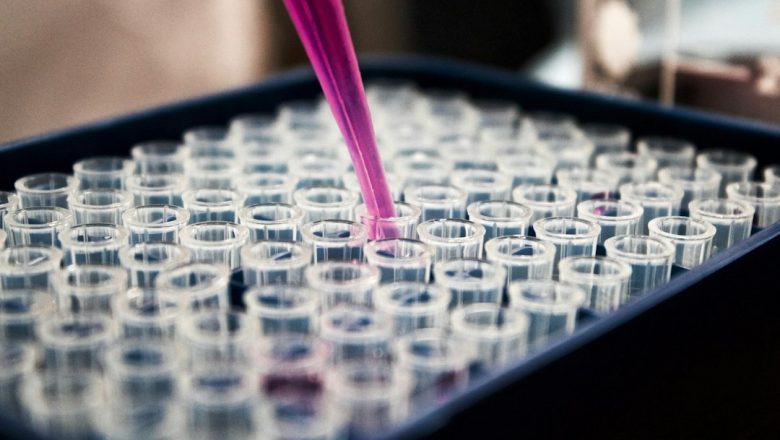
Laboratory-grown diamonds begin from a different economic logic. Their supply can expand with production capacity, their prices respond more directly to advances in manufacturing, and their uses extend beyond jewellery. DMCC’s new dedicated lab-grown diamond vertical points to applications in semiconductors, diamond wafers, quantum technologies and space, as well as consumer products.
That distinction matters. A material developed for high-performance industrial systems cannot be marketed only as a lower-priced imitation of a luxury object. It needs its own commercial identity. The long-term opportunity may be larger when the industry stops asking whether laboratory-grown diamonds are “real luxury” and starts asking which problems their physical properties can solve.
Dubai’s advantage is market architecture
Dubai’s position is not based on mining or mass cutting alone. Its advantage is the infrastructure around exchange: logistics, finance, secure storage, certification, international access and a dense network of traders. DMCC’s ecosystem also includes the Dubai Diamond Exchange, financing facilities, specialised vault services and a Luxury Innovation Centre intended to connect brands, suppliers and technology partners.
The next competitive advantage will therefore come from market architecture rather than volume by itself. Buyers need to know which category they are purchasing, how it was produced, how it was graded and what claims can legitimately be made about scarcity, sustainability or origin.
Clear separation is particularly important as price points diverge. If customers believe two categories are being deliberately blurred, confidence can weaken across both. If the distinction is transparent, natural stones can retain a scarcity-led proposition while laboratory-grown products compete on design, accessibility, consistency and technical performance.
Luxury now has a verification problem
For decades, luxury houses could rely on controlled distribution and brand authority. Digital resale, global marketplaces and increasingly capable manufacturing have changed that balance. Verification is becoming part of the product.
For natural diamonds, that means credible origin records, grading and chain-of-custody information. For laboratory-grown diamonds, it means accurate production disclosure and reliable identification. For jewellery brands, it means communicating these differences without turning the customer experience into a technical lecture.
Dubai can lead here if it treats trust as infrastructure. Common disclosure standards, interoperable records and stronger links between laboratories, exchanges, retailers and resale platforms would make the city more valuable to the industry than a marketplace concerned only with throughput.
A design opportunity, not only a trading opportunity
The city’s record trade numbers are impressive, but the higher-value question is how much design, branding and intellectual property can be built around that flow. Trading hubs capture transactions. Luxury centres create houses, signatures and objects whose value exceeds their materials.
Laboratory-grown stones could give emerging regional designers more freedom to work at scale, experiment with unusual cuts or create pieces that would be prohibitively expensive in natural diamonds. Natural stones, meanwhile, could support a more specialised ecosystem of high jewellery, private-client services and documented collectible pieces.
The opportunity is not to force both categories into the same display case. It is to build credible businesses for each.
What happens next
Three signals will show whether Dubai is successfully managing the split. The first is whether disclosure becomes clearer and more consistent. The second is whether laboratory-grown activity expands meaningfully into advanced industrial uses. The third is whether Dubai produces more globally recognisable jewellery brands rather than remaining principally a place through which stones move.
The diamond economy is changing from a debate about authenticity into a test of segmentation, technology and trust. Dubai has enough scale to shape the rules. Its larger challenge is proving that it can create value on both sides of the divide.
Sources
- DMCC: Dubai diamond trade reached a record US$41.7 billion in 2025
- DMCC: dedicated laboratory-grown diamond vertical
- DMCC diamond and luxury innovation ecosystem
Featured image: Edgar Soto / Unsplash.