Studio Economics
Egypt does not need to prove that it can manufacture clothing. The more ambitious question is whether it can convert production capability into a globally recognised fashion business—one that owns design, customer relationships and brand equity rather than capturing only the manufacturing margin.
The country’s National Industrial Strategy identifies ready-made garments and textiles among seven priority sectors. Government plans connect industrial development with supplier networks, technology incubators, export certification, vocational training and stronger links between smaller manufacturers and digital commerce.
Industry estimates cited by Egypt’s State Information Service placed garment exports on a path toward US$3.6 billion, compared with US$2.8 billion in 2024, while the Apparel Export Council has articulated a much larger ambition of US$12 billion by 2031.
Reaching that scale through contract manufacturing would still be economically valuable. Building Egyptian-owned brands would create a different kind of value.
Making the product and owning the margin
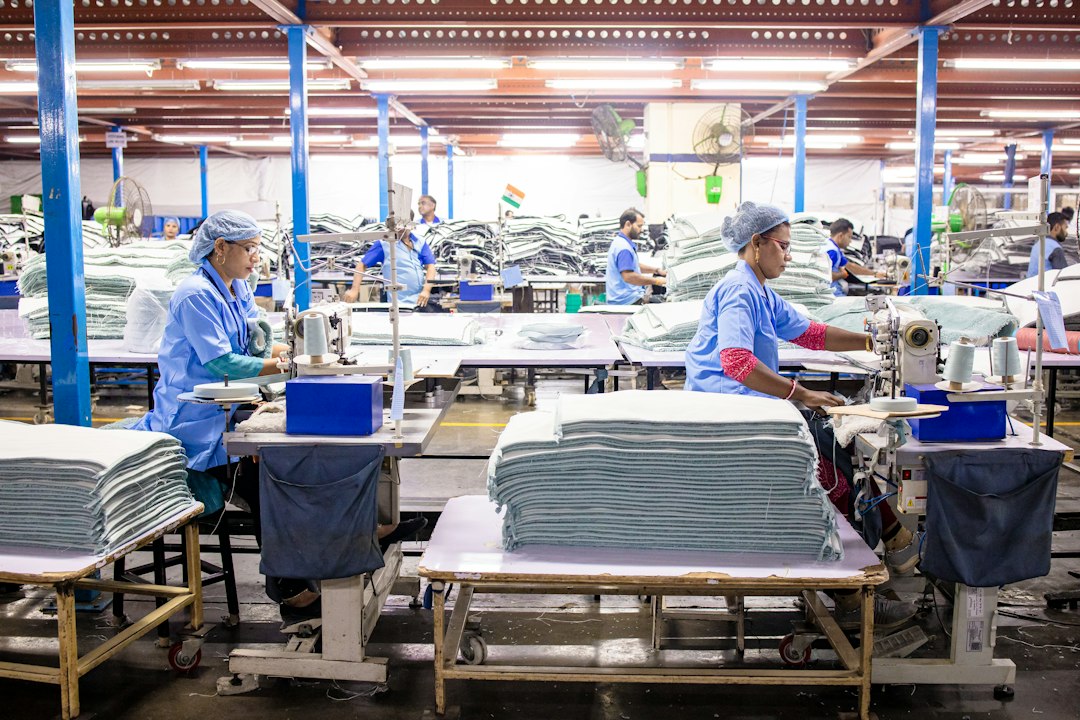
Contract manufacturing rewards efficiency, quality, compliance and delivery. The factory makes a product defined largely by someone else, while the international brand controls design, marketing, distribution and the final customer relationship.
That model can generate employment and technical capability, but the most valuable parts of the chain frequently sit elsewhere. Brand owners learn directly from customers, decide what enters the next collection and retain the intellectual property attached to the product.
An Egyptian fashion company seeking international reach must therefore develop two disciplines simultaneously. It needs the operational seriousness of an exporter and the cultural clarity of a brand.
Manufacturing can become a creative advantage
Fashion brands often treat factories as suppliers to be managed at a distance. A brand growing close to production can work differently. Designers can prototype faster, adjust construction, experiment with available materials and understand the real cost of each decision.
Egypt’s textile base, large workforce and access to several regional markets could support that relationship. Proximity between design and production can be especially valuable for emerging labels that cannot commit to the quantities demanded by large overseas manufacturers.
The opportunity is not limited to high-volume apparel. Specialist knitwear, premium cotton products, contemporary tailoring, resort clothing and design-led home textiles could all build on existing capabilities while pursuing higher margins.
But “Made in Egypt” must communicate more than origin. It needs to stand for a recognisable combination of material, construction, design and service.
A global brand is a management achievement
Creative talent is necessary, but brands usually fail for operational reasons: uncontrolled inventory, weak pricing, inconsistent delivery, excessive product ranges or dependence on expensive customer acquisition.
The leadership team needs merchandising, finance, supply-chain and digital expertise alongside a creative director. It must decide which products are signatures, which markets deserve investment and whether growth should come through wholesale, direct e-commerce, physical retail or partnerships.
This is where industry policy can evolve. Support programmes often focus on equipment, factory space and export participation. Brand-building requires additional capabilities: trademark strategy, photography, packaging, market research, wholesale negotiation, e-commerce operations and long-term creative direction.
Standards will shape the opportunity
Global apparel markets increasingly demand traceability, environmental compliance and reliable documentation. Egypt’s industrial strategy acknowledges the importance of green supply chains and local testing and certification.
For premium brands, these systems can become an advantage rather than a burden. A company that can document materials, labour standards, water use and product durability has a stronger story for retailers and customers who want evidence behind sustainability claims.
Traceability is also important for Egyptian cotton. The name carries global recognition, but recognition must be protected through credible sourcing and consistent quality. A modern brand can connect that material history to contemporary design without relying on nostalgia.
From export promotion to brand incubation
Egypt’s next step could be a focused brand-building platform for companies that already demonstrate product quality and export readiness. It would combine technical production support with merchandising, creative leadership, international wholesale mentoring and patient growth capital.
The objective should not be to manufacture dozens of superficial “national champion” labels. It should be to help a small number of differentiated businesses develop the systems required to survive several seasons and enter carefully chosen markets.
Success would be visible when an Egyptian label is purchased not as a development story or a souvenir, but because its product, identity and service compete convincingly with global alternatives.
Egypt already participates in the fashion industry through its factories. The larger prize is to participate through ownership: of the design, the brand, the customer data and the value created after the garment leaves the production line.
Sources
- Egypt State Information Service: National Industrial Strategy 2026–2030
- Egypt State Information Service: Made in Egypt industry review
- Egypt State Information Service: ready-made garment investment and exports
Featured image: EqualStock / Unsplash. Image is illustrative.