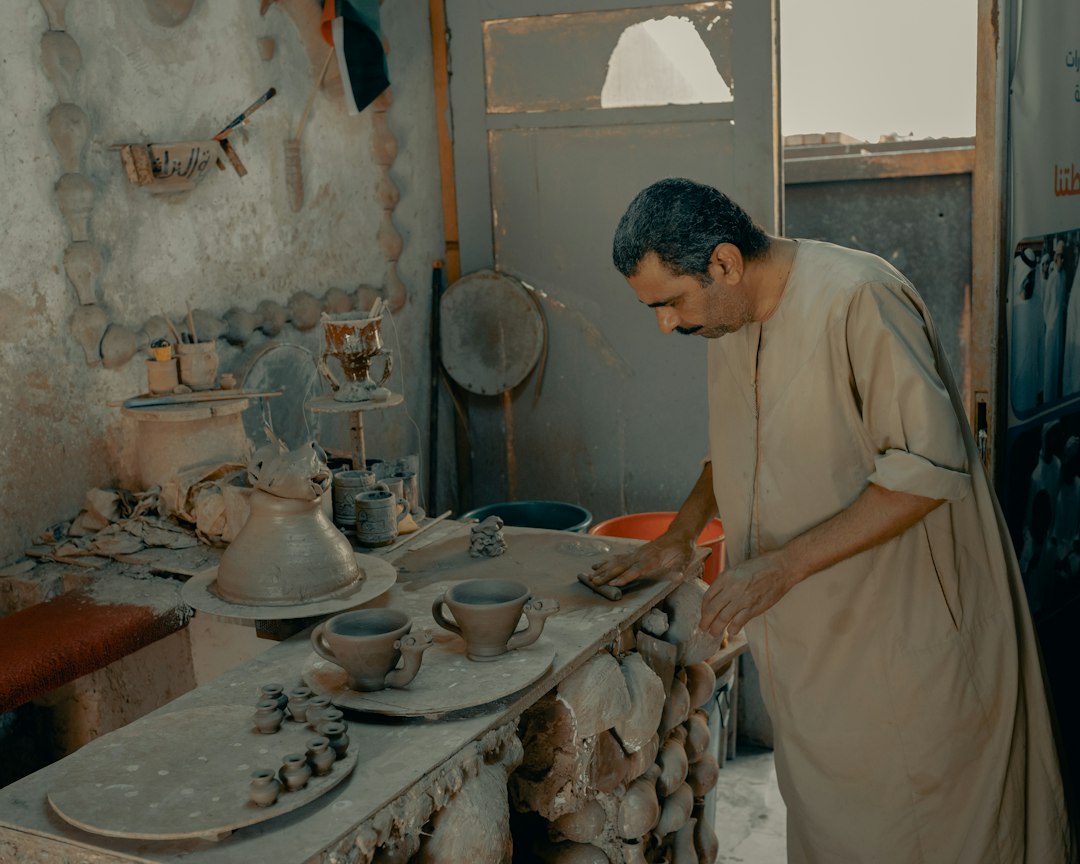
Traditional craft is increasingly being presented as part of the Gulf’s creative economy rather than only as heritage preservation. That shift creates opportunity—and a difficult question. How can artisan businesses reach larger markets without flattening the identity and skill that make their work valuable?
UAE cultural programmes in 2026 have connected artisans with exhibitions, training, commercial partners and national initiatives. The Ministry of Culture reported more than 77,000 visits to its Artisans Pavilion at Make it in the Emirates and announced cooperation agreements intended to support production, training and market access.
Attendance is an encouraging signal of interest. A sustainable industry, however, is built through repeat purchases, viable margins and careers that younger practitioners can imagine joining.
The trap of souvenir economics
Craft products are often placed into one of two markets. At the low end, they compete as inexpensive souvenirs, where price pressure encourages standardisation and imported imitation. At the high end, they appear as limited decorative objects, admired but purchased by a narrow audience.
A stronger creative economy needs a middle: products with authentic design, consistent quality and enough commercial structure to reach homes, hospitality projects, corporate buyers and international customers.
That does not mean converting every practice into mass production. It means deciding which elements can scale—distribution, packaging, digital sales and business administration—while keeping skilled making and cultural knowledge protected.
Pricing must include the real labour
Artisan businesses frequently underprice time. Materials are counted, but design development, training, failed pieces, finishing, storytelling and customer acquisition are not.
Public programmes can help by teaching cost accounting and wholesale pricing, but buyers also have a role. Hotels, developers and retailers should not ask for handmade identity at industrial commodity prices.
Longer contracts and predictable order volumes can support investment in apprenticeships and equipment. One-off commissions create visibility but rarely create stable employment.
Authenticity needs governance
As demand grows, so does the risk of cultural motifs being copied without attribution or benefit to the communities that maintained them. Labels and certification can help, but only if they are clear, credible and useful to buyers.
Provenance should explain where a product was made, who made it, which materials and techniques were used and whether a design is traditional, contemporary or collaborative. Digital records can support this, but governance matters more than technology.
Intellectual-property tools may protect specific brands and designs. Broader cultural knowledge requires community participation and rules that do not allow one company to privatise a shared tradition.
Design collaboration without extraction
Collaboration between artisans and contemporary designers can open new markets. The best projects treat both sides as creative partners. The weakest use craft as a surface treatment while most value accrues elsewhere.
Contracts should address credit, ownership, future production, pricing and the use of a maker’s name or story. Transparent agreements are particularly important when small artisan groups negotiate with large hospitality or retail buyers.
Distribution is the hidden infrastructure
A maker can produce excellent work and still fail commercially because photography, shipping, inventory, payments and customer service are weak. Shared platforms can lower those barriers if they offer more than a marketplace listing.
Useful infrastructure might include quality standards, fulfilment, export documentation, bilingual storytelling and access to interior designers or procurement teams. It should also preserve customer information and bargaining power for the producer.
A creative-industry test
The Gulf has the spending power, tourism flows and design ambitions to build globally recognised craft brands. Success should be measured not only through visitor numbers or exhibitions, but through artisan incomes, apprenticeships, repeat orders, exports and the survival of distinctive skills.
Heritage becomes economically sustainable when practitioners can build dignified businesses around it. The goal is not to freeze tradition or industrialise it beyond recognition. It is to create enough commercial strength for tradition to keep evolving.
Sources
- UAE Ministry of Culture: Artisans Pavilion participation in 2026
- UAE Ministry of Culture: agreements supporting artisans and creatives
- UNESCO: cultural-expression support programme for the Gulf and Yemen
Featured image: Clay Banks / Unsplash. Image is illustrative.