
Saudi Arabia Is Building the AI Infrastructure First. Will Enterprise Demand Catch Up?
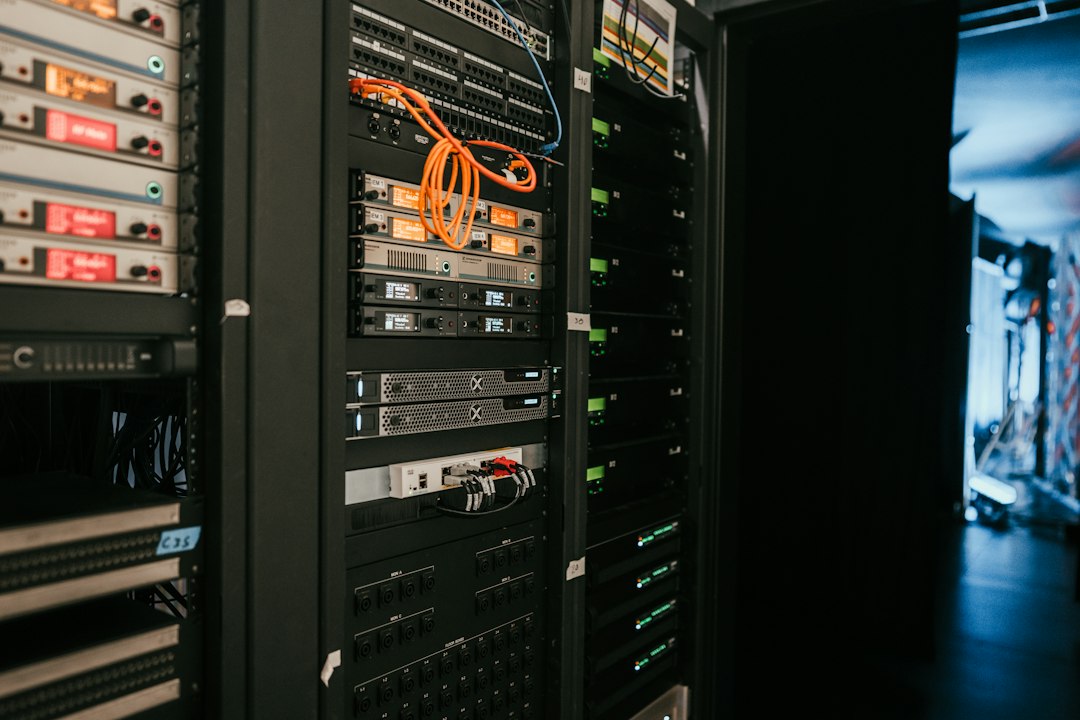
Saudi Arabia is approaching artificial intelligence as an infrastructure project before it becomes a broad enterprise habit. Data centres, cloud regions, computing capacity and national platforms are arriving at a scale intended to make the Kingdom a serious node in the global AI economy. The commercial test comes next.
Official reporting on LEAP 2026 placed announced investments and agreements at nearly $15 billion across AI infrastructure, data centres, cloud services, technology manufacturing and venture capital. The announcements included planned Saudi cloud-region launches, expanded data-centre capacity and partnerships linking global technology suppliers with domestic platforms.
Announcements are not the same as deployed capacity, and deployed capacity is not the same as productive demand. The strategic question is whether Saudi organisations can develop enough valuable, repeatable workloads to justify the infrastructure being built.
Why capacity is coming first
AI services require compute, storage, networking, reliable power and specialised operational skills. Countries that depend entirely on overseas infrastructure have less control over latency, data location, procurement and resilience. Building domestic capacity can therefore support sovereignty as well as growth.
It can also alter the startup environment. Local founders gain access to enterprise customers, government programmes and infrastructure partners. Global companies gain a route into a large market. Universities and researchers gain potential access to resources that would otherwise be difficult to finance.
But infrastructure is only enabling capital. It produces economic value when applications solve problems that customers will pay to address.
The demand gap
Many enterprises want AI but are not ready to use it at scale. Data may be scattered across departments. Procurement may favour large demonstrations over incremental operating improvements. Security teams may be involved too late. Managers may not know which processes are expensive, slow or error-prone enough to justify redesign.
This creates the risk of a capacity-adoption gap: impressive infrastructure growing faster than the number of mature workloads.
Closing that gap requires industry-specific implementation. Banks need governed models for compliance and service. Industrial companies need predictive maintenance and quality control. Retailers need forecasting. Government entities need reliable Arabic-language systems that can operate within clear accountability rules.
Arabic capability is part of the business case
Saudi Arabia’s AI strategy cannot be evaluated only through global models. Arabic-language performance, including local terminology and dialect, is central to public services, media, education and customer support.
The LEAP announcements referenced further availability of Arabic-language models and creative tools adapted to Saudi context. The durable advantage will depend on evaluation: whether those systems perform reliably across real documents, voices, sectors and user groups.
Localisation should therefore include representative datasets, benchmark design, safety testing and the participation of sector experts—not simply an Arabic interface.
Power, cooling and utilisation
Data centres are physical industrial assets. Their economics depend on utilisation, energy supply, cooling, hardware refresh cycles and customer concentration. Large announced capacities can create strategic leverage, but underused facilities tie up capital and consume resources without generating proportional productivity.
Investors should watch contracted demand, construction milestones, operational megawatts, customer diversity and the share of workloads serving export markets. Policymakers should watch energy efficiency, water requirements, skills development and the ability of smaller companies to access capacity.
The enterprise adoption agenda
The strongest next step would be a shift from infrastructure announcements to adoption evidence. How many businesses have moved beyond pilots? Which sectors are producing measurable gains? How many domestic applications can sell outside the Kingdom? Are procurement rules helping smaller suppliers prove value?
Saudi Arabia’s approach gives it a credible chance to become a major regional AI platform. Yet the economic return will not be determined by server capacity alone. It will be determined by the quality of demand built on top of it.
Sources
- Saudi National Portal: LEAP 2026 investment and infrastructure announcements
- Saudi Press Agency: AI partnerships and computing infrastructure
- Saudi Vision 2030 Annual Report 2025 executive summary
Featured image: Kevin Ache / Unsplash.