Saudi Fashion’s Missing Middle Is Manufacturing
Studio Economics
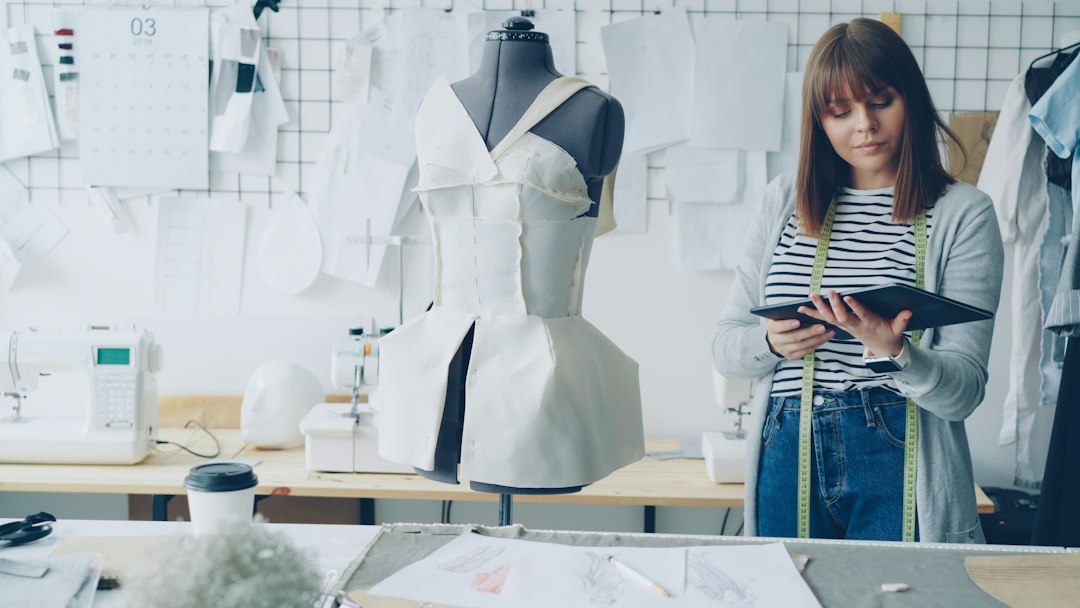
Fashion ecosystems are easiest to see at their glamorous edges. There is the designer sketching a collection and the model presenting it under runway lights. Between those moments sits the less visible machinery that determines whether a creative idea becomes a dependable business: product development, pattern cutting, sampling, grading, material sourcing, quality control and repeatable production.
Saudi Arabia has invested heavily in fashion visibility. Riyadh Fashion Week has expanded across three editions, featured more than 100 brands and attracted approximately 27,000 visitors, according to research highlighted by the Fashion Commission. The next test is whether that attention can support an industrial middle capable of turning promising labels into scalable houses.
A recent agreement between the Saudi Fashion Commission and Italy’s MinervaHub points directly at that challenge. The partnership covers design, development, manufacturing expertise, production technologies and local capability building, including support for The Lab, the commission’s product-development facility.
Runway success is not production readiness
A collection that photographs well is not necessarily ready for wholesale. Buyers need delivery dates, consistent sizing, reliable fabric availability, accurate costing and the confidence that a second order will match the first. Young labels frequently discover that creative recognition increases demand faster than their operations can absorb it.
This is fashion’s missing middle. It includes technicians and managers whose names rarely appear in a show review but whose work protects the brand: pattern makers, sample machinists, production planners, textile specialists, merchandisers and quality teams.
Without that layer, designers face an uncomfortable choice. They can remain small and highly customised, outsource most production abroad, or accept growth that may weaken quality and cash flow. None is automatically wrong, but the choice should be strategic rather than forced by a lack of local options.
Luxury requires repetition without sameness
Luxury manufacturing is not mass manufacturing with more expensive fabric. It demands a difficult balance: repeatable standards without erasing craft, small production runs without impossible unit costs, and a recognisable house language that still evolves from one collection to the next.
Saudi brands can build an advantage from cultural knowledge, climate awareness and proximity to a rapidly changing customer. But those insights create durable value only when translated into proprietary cuts, materials, techniques and supply relationships. A strong brand must be able to explain not just what inspired a garment, but why its construction belongs to that house.
That is where manufacturing becomes intellectual property. A signature is often embedded in a seam, a finish, a textile treatment or a method of combining materials. Developing those capabilities locally gives designers more control over iteration and protects knowledge that can disappear when every technical step is outsourced.
Imported expertise should create local professions
Partnerships with established international specialists can compress years of learning. The goal, however, should not be permanent dependence on visiting expertise. It should be the creation of recognised professions, training pathways and commercially viable production businesses inside the Kingdom.
That requires more than workshops. Technical education must connect to actual orders. Production facilities need enough demand to invest in equipment. Designers need realistic guidance on margins and minimum quantities. Retailers and large institutions can help by placing disciplined orders rather than offering exposure alone.
The Lab can be particularly important if it operates as shared infrastructure. Many emerging labels cannot justify owning advanced equipment or maintaining a full technical team. A common product-development platform can allow them to prototype, test and refine before committing to larger production.
The buyer is the real judge
Fashion-week attention is useful, but the health of the ecosystem will be measured elsewhere: repeat wholesale orders, sell-through rates, export customers, timely delivery and the survival of brands beyond their first celebrated collection.
This makes buyers essential to creative development. Their feedback can be uncomfortable, but it reveals whether a collection has a coherent price architecture, whether it duplicates products already in the market and whether the brand can support a commercial calendar.
Saudi fashion does not need to choose between cultural expression and commercial discipline. The strongest global luxury houses combine both. Creative confidence gives the work meaning; operational discipline gives it longevity.
What success would look like
A mature Saudi fashion system would include several layers: experimental ateliers, specialised luxury workshops, technology-enabled sampling facilities, flexible small-batch producers and larger export-oriented manufacturers. It would also offer clear career paths for technical talent, not only designers and creative directors.
The Fashion Commission’s manufacturing partnerships are therefore more consequential than they may first appear. They address the point where cultural ambition encounters delivery.
Saudi fashion has already demonstrated that it can create attention. Its next achievement will be proving that a garment imagined in Riyadh can be developed, manufactured, delivered and reordered with standards strong enough to travel.
Sources
- Saudi Press Agency: Fashion Commission and MinervaHub manufacturing partnership
- Saudi Press Agency: Fashion Week Economics research
Featured image: Vitaly Gariev / Unsplash. Image is illustrative.