Can Heritage Jewellery Become a Saudi Luxury Export?
Luxury Systems
Heritage can give a jewellery brand a beginning, but it cannot complete the business. A motif may carry memory, a material may connect to place and a technique may preserve generations of skill. To become a global luxury house, those elements must be translated into a design language that can evolve without losing identity.
Saudi Arabia’s Fashion Commission has been testing that translation through its Saudi Heritage Revival programme. The 2026 edition, developed with Swarovski and Art of Heritage, asked emerging designers to reinterpret Saudi adornment and craft through contemporary jewellery and garment design. Participants received technical guidance, worked with reused crystal materials and presented their finished pieces to an expert panel.
The initiative is useful because it moves heritage beyond display. It treats cultural material as a starting point for product development. The larger opportunity is to turn that process into an exportable jewellery industry.
A motif is not yet a house code
Luxury brands become recognisable through repeated design decisions. A proportion, setting, clasp, surface treatment or use of colour can become a house code—something identifiable even when the logo is absent.
Heritage-inspired jewellery often stops one step earlier. It reproduces a familiar symbol, presents it in a new material and relies on cultural recognition to create value. The result may be attractive, but it is difficult to extend across collections without becoming repetitive.
A stronger approach studies the logic beneath the motif. What geometry structures it? How was it worn? What did the original maker understand about movement, sound, weight and social meaning? Those principles can generate a broader design system rather than a single decorative reference.
Craft must meet engineering
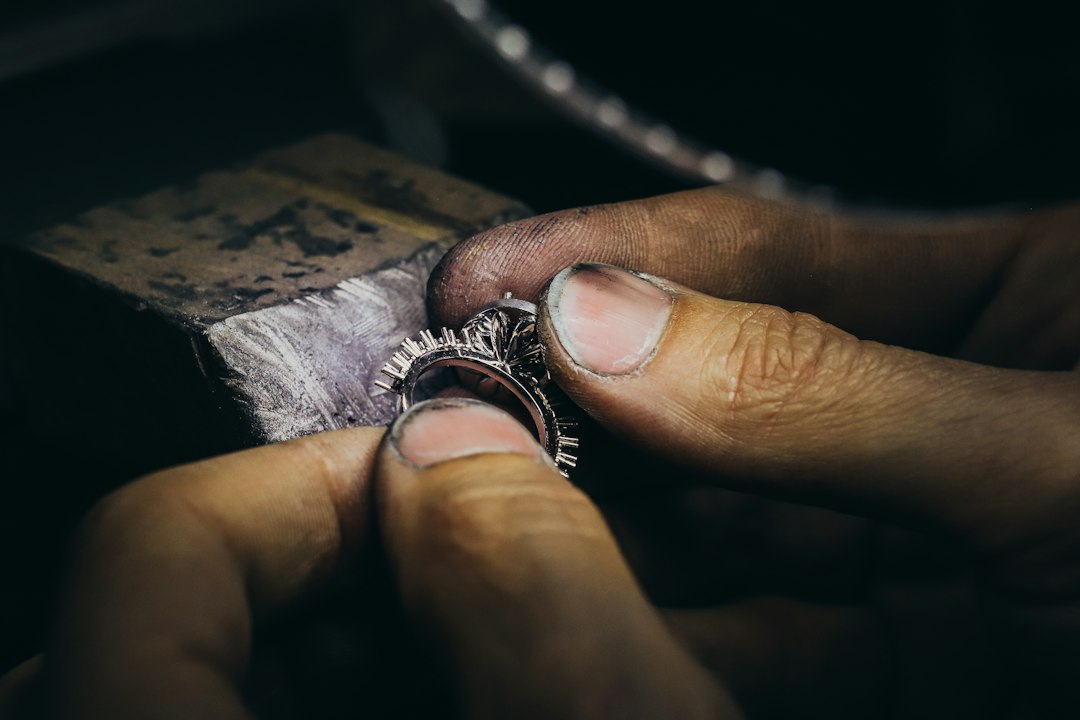
Jewellery is a creative field with unforgiving technical standards. A beautiful concept must survive casting, stone setting, polishing, repeated wear and repair. Small weaknesses are magnified because the object is examined at close range and expected to last for years.
Saudi designers therefore need access to the technical middle of the industry: model makers, goldsmiths, setters, gem specialists, computer-aided design professionals and quality-control experts. Digital modelling and rapid prototyping can accelerate development, but they do not eliminate the judgment required to balance strength, weight and finish.
The same principle applies to material innovation. Reused crystals or new composites can open creative possibilities, but sustainability claims must be supported by traceable sourcing and clear information. In modern luxury, documentation is increasingly part of craftsmanship.
The creator needs ownership
Many designers can produce a successful collection through an external workshop. Fewer control the intellectual property, technical files and supplier relationships required to reproduce and develop it.
That control matters if the ambition is export. A buyer in another market needs confidence that an order can be delivered consistently. A customer returning years later needs repair and aftercare. A growing brand needs to prevent its distinctive designs from being copied before it has established recognition.
Creative leadership in jewellery is therefore partly legal and operational. It includes trademark strategy, design registration, supplier agreements, pricing discipline and an archive recording the evolution of each piece.
Global does not mean universal
A Saudi jewellery house should not erase its regional character to become internationally legible. Global luxury customers often seek specificity: a credible point of view connected to a place, material or way of making.
The risk lies at the opposite extremes. Work can become so literal that it resembles a souvenir, or so internationally generic that its origin becomes irrelevant. The most compelling position sits between them—culturally grounded, technically resolved and contemporary enough to enter wardrobes beyond a single market.
Distribution should reinforce that positioning. Rather than pursuing too many retailers, an emerging house may benefit from a small number of carefully chosen stockists, private appointments and exhibitions where the design narrative can be explained. Scarcity is valuable only when it reflects disciplined production, not unreliable supply.
From programme to industry
Competitions and mentorship create discovery. An industry requires continuity after the showcase: access to workshops, development finance, hallmarking, export support, gem sourcing, photography, wholesale guidance and international representation.
Saudi Arabia already has a strong domestic market for adornment and gifting. The strategic opportunity is to retain more value through Saudi-owned design and brand equity while building technical professions around the designers.
The first global Saudi jewellery house may begin with heritage, but it will succeed through systems. It will know what it stands for, how each piece is made, how quality is protected and how a customer can recognise the brand across decades of collections.
Heritage supplies meaning. Luxury leadership turns that meaning into a living house.
Sources
- Saudi Press Agency: Saudi Heritage Revival programme with Swarovski and Art of Heritage
- Saudi Press Agency: fashion manufacturing and technical capability partnership
Featured image: Tahlia Doyle / Unsplash. Image is illustrative.